

By Geert BENOIT, Managing Director, Yamagata Europe, and BJA Editorial Committee Chair
As I was in Tokyo for over two weeks recently, I hoped it would be easy to find a timeslot for a meeting with Rob VAN NYLEN for this interview. That did not turn out to be the case. Nevertheless, we eventually managed to align our schedules and agreed to meet at a washoku restaurant in Nerima Ward to limit travel time for Rob.
Rob would be flying to Belgium the next morning, and before meeting up with me, he had engaged in a panel discussion with a group of Flemish entrepreneurs who were on a Japan discovery trip hosted by the VOKA Chamber of Commerce East Flanders.
As we entered the restaurant, we were immediately immersed in the warm atmosphere of a place where Rob is clearly a frequent patron. Rob left the omakase (choice) of dishes up to the chef, and I will certainly do the same on my next visit. The food was delicious, incorporating fresh and seasonally adapted ingredients. It was a showcase of craftsmanship, attention to detail, as well as pride in sharing the product of your expertise with the customer. Welcome to Japan.
Rob has a long track record in Japan. He has run his consulting company, Akoni KK from Japan for 30 years now, and has been involved in many different projects and business ventures during that time.
Geert: You met a group of VOKA visitors from East Flanders this afternoon?
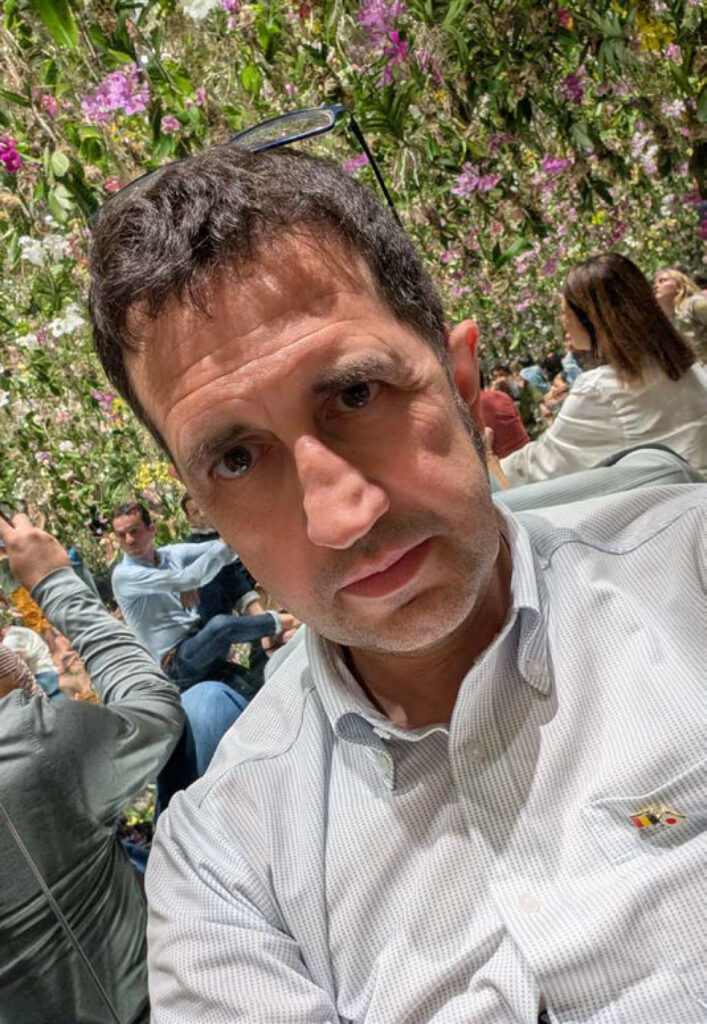
Rob: Indeed. The influx of visitors from Belgium seems endless as the World Expo is ongoing. This time, I was invited to a panel discussion about entrepreneurship with mainly tech entrepreneurs, organized by Stefan Derluyn from the VOKA. One of the questions I asked them was, “Who likes the concept of kaizen?”. Most of the attendees raised their hands, even though apparently not everybody knew the concept of kaizen or continuous improvement.
After I explained the concept, I also explained that I am a strong believer in kaizen but that it simultaneously is also becoming a dangerous thing for Japan. The Japanese understanding of kaizen is over-iconized, because this is a country where the fax machine is still used and endlessly “kaizened”. With a focus on kaizen only, you can easily miss the boat when it comes to achieving true innovation.
Geert: But we have to admit that the Japanese are masters of improving and streamlining manufacturing, right?
Rob: Indeed. This is what I saw at my first job at the new JV between Honda Motors Belgium and Honda Foundry Japan, called HFB, and also today (30 years later) at JCP, the joint venture of Cartamundi in Japan where I work as an external advisor to the Board while assisting our Japanese customers on their global journey within the Cartamundi Group. It is a company that produces exclusively trading card games for both the domestic and international markets. The production has to be 200% perfect, because these cards are basically printed money. With a history in the production of playing cards dating back to 1765, the Cartamundi Group from Turnhout obviously knows the industry and the manufacturing of cards inside out. In working with the Japanese partner, they have realized an equal-level partnership between two real, dedicated specialists in card manufacturing.
Geert: The topic of top-class manufacturing also seems to be at the core of your new venture.
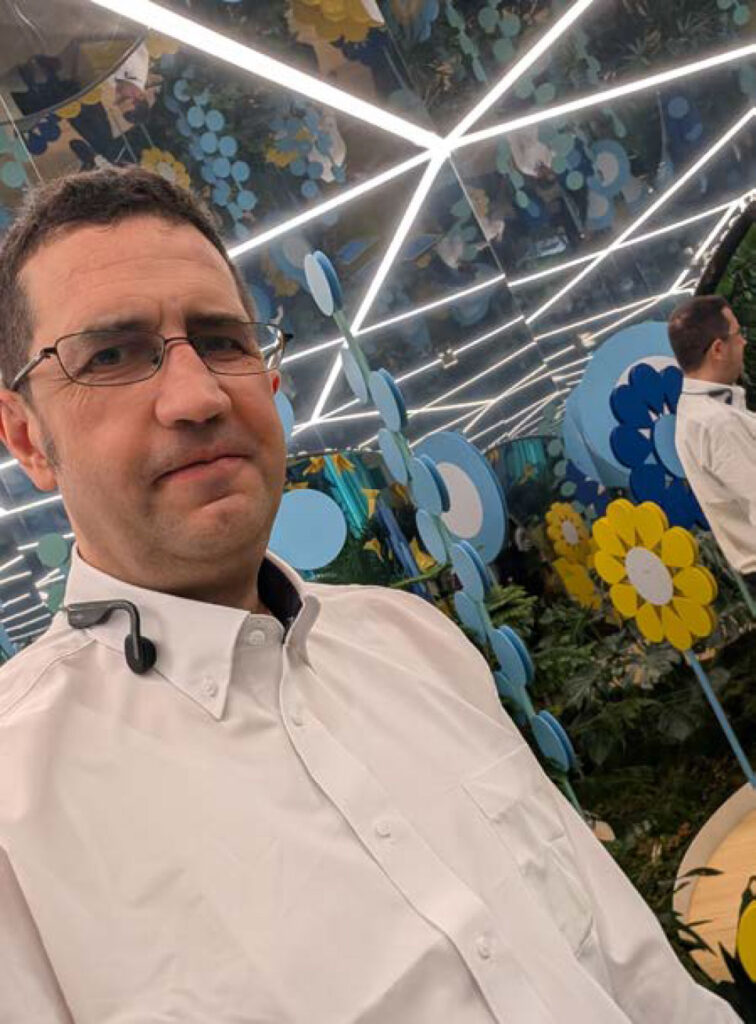
Rob: Yes, indeed, and it will be my last venture. I consider it my sotsugyou (卒業) – graduation – project, as it relates to ongaeshi (恩返し), the Japanese value of repaying what we’ve received. All of the non-Japanese members involved in this project together have spent over 100 years in and with Japan. During that time, we built careers, raised families, and developed strong business ties across borders. We received a lot from Japan; now it is time to give back.
Geert: Wow! Tell me all about it, I’m curious. But let’s start with the name: “AKISHA”, what a fantastic name!
Rob: Before I tell you about the name, I have to explain that, in order to prepare for this project, I joined an entrepreneurial course here in the local ward where I live. This is organized for people who want to re-orient their careers. The lecturers were people from different industries who live in this area and shared their experiences with the ‘students’.
There, I was told that nowadays a company name has to carry the meaning and purpose of what you actually do or want to achieve – not something like Akoni, the name of my consultancy firm. That is why we came to AKISHA, in analogy with akiya, which is widely known by now. For the readers who are not up to speed on day-to-day Japan things, “akiya” means “empty house”. It is a term referring to the houses that are empty and mostly abandoned due to the continuous migration from the countryside to the cities as well as the depopulation of Japan due to natality issues. Apparently, over 9 million akiya counted in 2024.
Geert: “Aki” means empty and “Sha” means company. Will you be upgrading & selling brownfields and old industrial sites?
Rob: No, no, no, we are on a different mission. Due to depopulation, lack of entrepreneurship, and other reasons, Japan now counts over 1.3 million SME companies with an average of 5 to 20 employees, where the owner is having trouble finding a successor.
This represents a potential whopping GDP loss of 22 trillion JPY for Japan. At AKISHA, we have decided to exclusively focus on what we call monozukuri companies. Japanese firms have turned manufacturing into a precise science, and monozukuri encompasses dedication, innovation, and the pursuit of excellence in production. These SMEs created the know-how and skills to produce top-quality products that are needed in the Japanese manufacturing value chain. Additionally, though this is often overlooked, these small monozukuri champions are also a very important link in the social mesh of Japanese society.
The people who own and work in these companies are not the salarymen that were highlighted by Japan watchers 20-30 years ago, but the people with the skills to build the Japanese manufacturing foundation. Unfortunately, they have been under the radar and undervalued. Our ambition is to uplift these companies in the value chain. The clue is their untapped potential for export. That is where we can add value as a semi-foreign venture.
Geert: You mentioned “We”, and “our” ambition. Who are your partners?
Rob: This venture is presently a start-up business venture with Bernard CATRYSSE, Rudie FILON, and two Japanese persons. Bernard and Rudie work on the European side, while I work on the Japanese side with the 2 Japanese partners.
Rudie FILON is the CEO and brings 30+ years of Japan and Asia experience. As a retired EU diplomat, he leads our longterm strategy and execution.
Bernard CATRYSSE has deep knowledge and a very valuable network in Japan. He manages legal affairs and risk oversight from Belgium.
Kotoku NIINUMA is the CTOO and COO, focusing on smooth transitions and operational excellence. He will ensure that every company retains its unique value. Takanori MIYADERA is the CFO and leads the finance department, overseeing forecasting and investment planning.
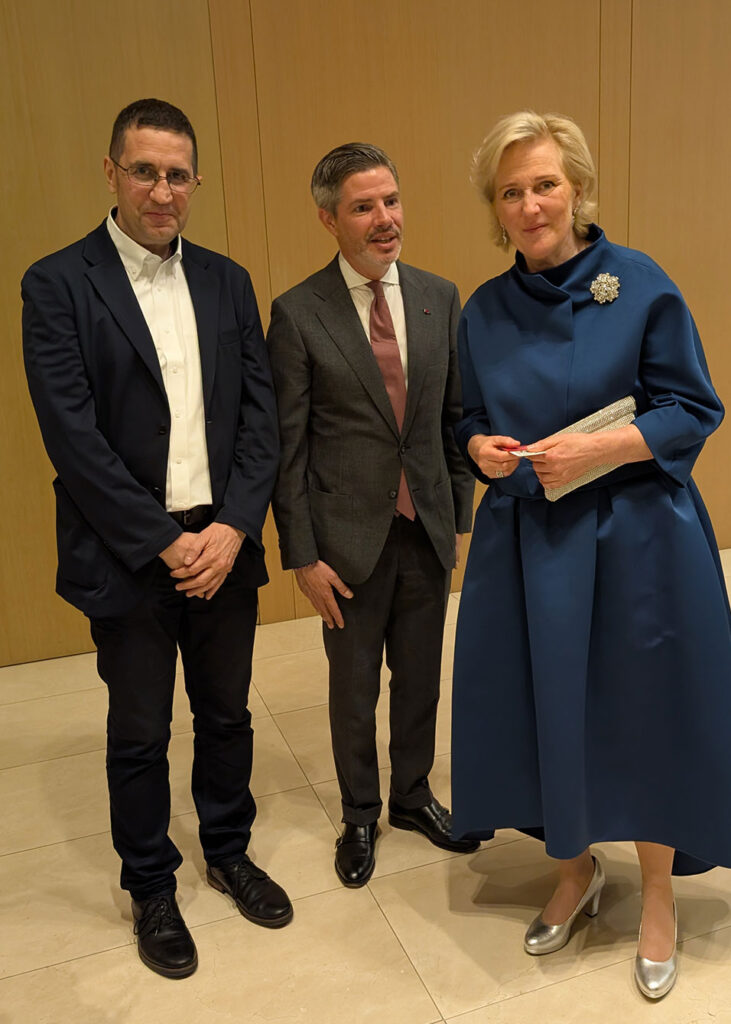
Finally, I connect Japan and Europe via my personal and business network. As Chief Purpose & Sourcing Purpose, I mainly focus on finding and acquiring the hidden monozukuri SME gems that are willing to join the AKISHA group for global business expansion.
Geert: Will you manage the M&A as consultants, or invest yourself?
Rob: Well, it is a mix of the two. We are obviously looking for further financial investment to grow our potential portfolio. In a sense, we are an investment vehicle, but we want to skip the long process of due diligence, which is too heavy, regardless, for the smaller SMEs that we are targeting. The point is that we want to have a minimum +51% majority in the initial phase and create a smooth transition of the monozukuri knowledge while we take on the management and administration of the company. That part is usually neglected and in bad shape, so we want to take over the burden of this administrative side and quickly modernize it. In other words, we will offer back-office as a service. This will not be limited to the existing back-office operations, but we want to broaden the scope and also offer marketing advice and business development expertise by creating new global export markets.
Although Japan faces a serious succession crisis, we don’t just see risks. Instead, we recognise an opportunity to protect the legacy of monozukuri, the spirit of craftsmanship rooted in quality, precision, and pride. That’s why our approach is different from any kind of existing M&A company. Rather than chasing short-term fast profits, we will carefully invest for the longer term. By doing this, we will breathe new life into the once famous “Made in Japan” brand.
We are convinced that we can provide hands-on support to help them grow beyond Japan, which is usually not in the scope of the small companies we are targeting. As a result, our mission is to ensure that Japanese craftsmanship moves beyond mere survival. It must move towards a bright and stable international future.
Geert: How will you find the best match? 1.3 million candidates are a lot to choose from.
Rob: That is true, but at least it is a lot better than being active in the so-called Red Ocean business, where companies fight each other with tiny margins for the same customers. We will need the help of the media, business associations, and the local press, because many of these SMEs are hidden gems. Ultimately, we want to create a marketing magnet that brings the companies to us, so we can then filter out those with real potential from those with less global business growth potential. We are convinced that the best out there will find us. This week, I did my first interview with a local business magazine. This is how it will run. And we are not afraid of competition: the more ventures do what we do, the better for us. At present, we have reached a first-principles acquisition agreement with a heavy industrial monozukuri company from Osaka and are in talks to acquire a second company from the Kanazawa region.
Geert: Thank you, Rob. I wish you all the best, and it is nice that we found time to talk today.
We said goodbye at the gate of the train station. Rob walked home, while I got on the train to head back to my hotel. Looking out at the sprawling landscape with millions of houses in the Kanto area, I wondered to myself: under which of all these roofs do the hidden monozukuri gems live that will stand up and knock on AKISHA’s door?
We will find out in time.
Source:
BJA – Belgium-Japan Association and Chamber of Commerce, Trade Flows & Cultural News, Number 149 – December 2025 [pdf]